
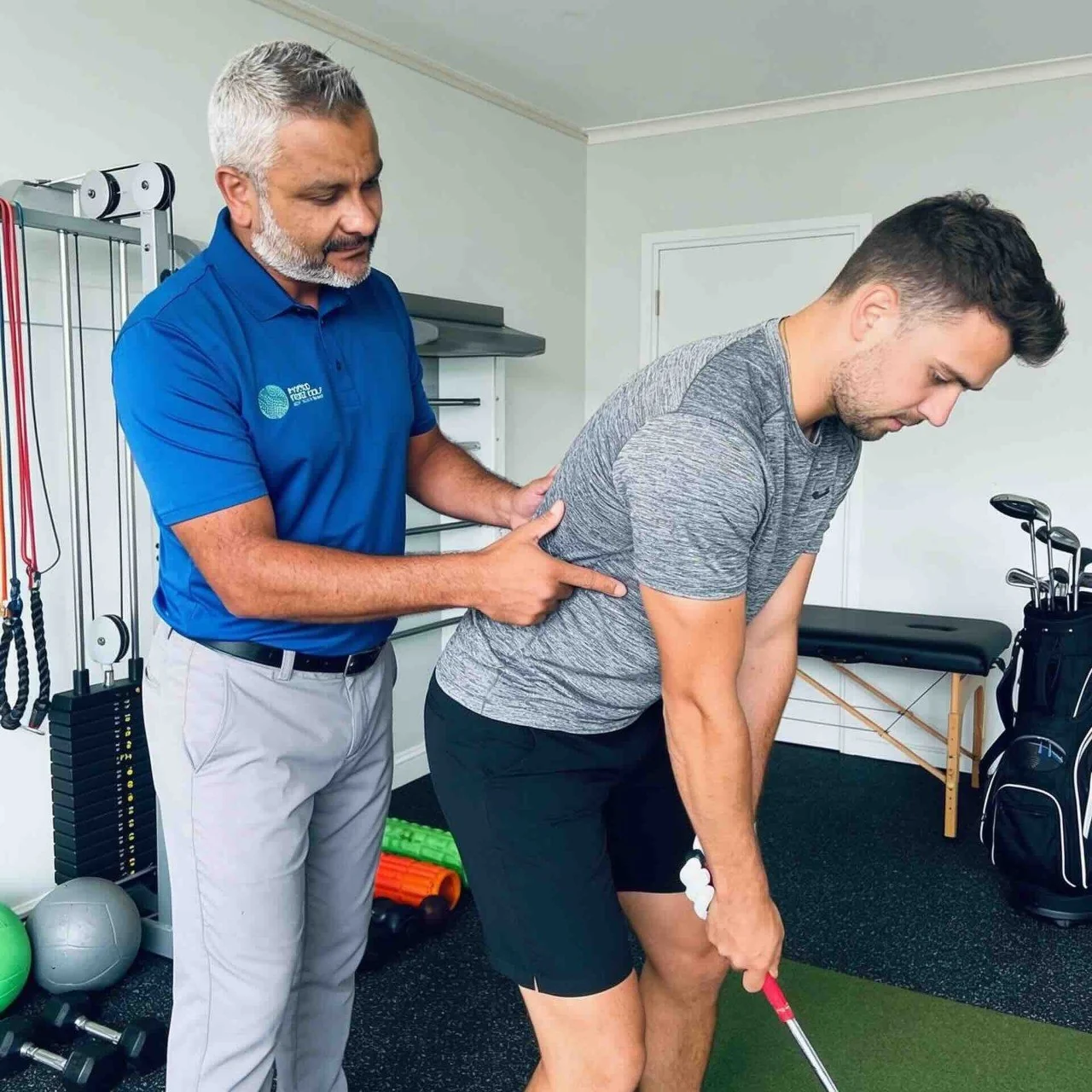
At a Glance
- Area affected
- Neck (cervical spine)
- Also known as
- Cervical strain, neck stiffness
- Common golf trigger
- Keeping the head fixed while the trunk rotates, plus posture over the ball and putting.
- Our approach
- Restore neck and upper-back mobility, settle the tissue, then improve control and posture.
The neck holds relatively still while the rest of the body turns hard around it, and it spends a lot of time bent forward over the ball. Both put demand on the neck and upper back.
Most golf neck pain is a stiffness or muscular problem rather than anything serious, and it usually eases well with the right combination of movement and strengthening.
What Causes Neck Pain in Golf?
Keeping your eyes on the ball means the neck resists the rotation happening below it. Over a round, and especially with a stiff upper back, that adds up.
- A stiff upper back forcing the neck to compensate
- Sustained forward-bent posture over the ball and putts
- Holding the head fixed against strong trunk rotation
- General postural load from desk work on top of golf
The upper back is the key
When the thoracic spine (upper back) rotates freely, the neck has to work far less. Improving upper-back mobility is often the fastest route to easing the neck.
Symptoms to Watch For
- Stiffness or aching on one side of the neck after a round
- Reduced ability to turn the head fully
- Tension into the upper shoulders
- Discomfort holding your posture over long putts
See someone sooner if
You have arm pain, pins and needles, numbness or weakness in the arm or hand, or headaches with the neck pain. These warrant a proper assessment.
How Physiotherapy Helps
Treatment eases the painful, stiff tissue and restores movement, then builds the neck and upper-back control that keeps it comfortable through a round.
- 01
Settle
Hands-on treatment and mobility work reduce pain and stiffness.
- 02
Mobilise
Restore upper-back rotation so the neck does less of the work.
- 03
Strengthen
Build neck and postural control for sustained positions.
- 04
Return
Back to full rounds without the familiar stiffness.
This page is general information about golf injuries, not a diagnosis or treatment plan. Every golfer is different, so book an assessment with Kam for advice tailored to you.
Frequently Asked Questions
Why does my neck get stiff after golf?
The neck holds your head steady while your body rotates hard beneath it, and it spends time bent forward over the ball. A stiff upper back makes the neck compensate, which is what leaves it aching.
Can improving my upper back help my neck?
Very often, yes. Better thoracic (upper-back) rotation means the neck has to work much less during the swing, so improving it is one of the most effective ways to settle neck symptoms.
Is golf neck pain serious?
Most is simple stiffness or muscular strain and settles well. Arm symptoms, numbness, weakness or persistent headaches are reasons to have it assessed rather than left.
How Kam Can Help
Golf Fitness Screening
You would not rebuild a swing without knowing what your body can and cannot do. A golf fitness screening gives you that picture.
Explore Golf Fitness Screening