
At a Glance
- Area affected
- Inside of the elbow (medial epicondyle)
- Also known as
- Medial epicondylalgia, medial epicondylitis
- Common golf trigger
- Gripping too hard, hitting the ground before the ball (fat shots) and a rapid rise in volume.
- Our approach
- Settle the tendon, correct the load, then rebuild forearm and grip strength progressively.
Golfer's elbow is felt on the inside of the elbow, and despite the name it is common in plenty of everyday activities too. In golfers it usually traces back to grip pressure and how the club meets the turf.
It responds well to loading the tendon correctly. Rest alone tends to settle it briefly, then it flares the moment you play again.
What Is Golfer's Elbow?
The tendons that bend your wrist and fingers attach to a bony bump on the inside of the elbow. When those tendons are loaded more than they can tolerate, they become painful and sensitive.
It is a tendon overload rather than an injury from a single moment. That is why it tends to build gradually and hang around if the load is not managed.
Golfer's elbow vs tennis elbow
Golfer's elbow is pain on the INSIDE of the elbow. Tennis elbow is the same problem on the OUTSIDE. Golfers can get either, and sometimes both.
Why Golfers Get It
- Gripping the club too tightly, especially with the trail hand
- Hitting heavy or fat shots that jar the wrist and forearm
- A big jump in range or playing volume without a build-up
- Poor wrist control through impact
- Limited forearm and grip strength going into the season
Technique and equipment can play a part too. Grip size, shaft flex and how you deliver the club all change how much the forearm tendons have to work.
How Physiotherapy Helps
The reliable path with tendon pain is to load it, not rest it. Treatment settles the irritation, then progressively strengthens the tendon so it can handle golf again.
- 01
Settle
Reduce the aggravating load and use targeted exercise to calm the tendon.
- 02
Load
Progressive forearm and grip strengthening rebuilds the tendon's capacity.
- 03
Correct
Address grip pressure, wrist control and volume so the overload does not return.
- 04
Return
A staged return to full swings and full rounds.
Grip pressure check
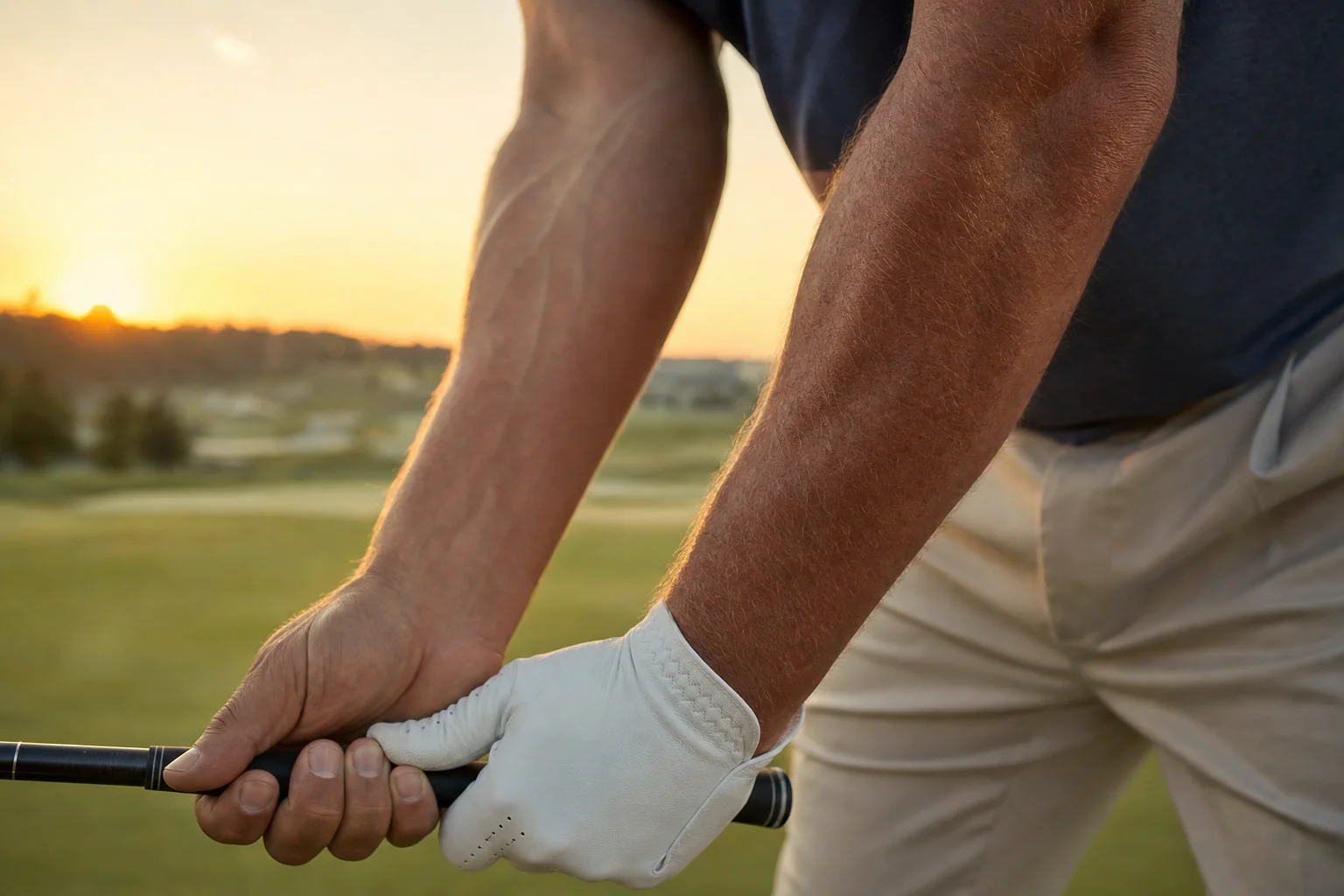
On a scale of one to ten, most golfers grip at an eight. Dropping to a four or five through the swing often takes real strain off the inside of the elbow.
Managing It Between Sessions
- Ease grip pressure and consider a slightly larger grip
- Warm the forearms up before hitting balls
- Reduce range volume while symptoms are settling
- Keep up your prescribed loading exercises consistently
This page is general information about golf injuries, not a diagnosis or treatment plan. Every golfer is different, so book an assessment with Kam for advice tailored to you.
Frequently Asked Questions
Should I rest completely if I have golfer's elbow?
Complete rest is usually not the answer. Tendons respond best to the right amount of load, so guided strengthening tends to give a more lasting result than rest alone, which often flares again on return to play.
Will a brace or strap fix golfer's elbow?
A strap can ease symptoms in the short term by changing how load transfers through the forearm. It is a helpful aid, not a cure, and works best alongside a proper strengthening program.
How long does golfer's elbow take to recover?
Tendon problems typically take several weeks to a few months to rebuild capacity. The timeframe depends on how long it has been there and how consistently the loading program is followed.
How Kam Can Help
Golf Fitness Screening
You would not rebuild a swing without knowing what your body can and cannot do. A golf fitness screening gives you that picture.
Explore Golf Fitness Screening