AI Overview
You can often keep playing golf with golfer's elbow, but only if the pain stays mild and settles quickly after a round. The tendon does not heal with rest alone. It heals when you load it progressively, so the fix is a graded strengthening program alongside grip, volume and technique changes, not simply stopping. Sharp pain, weakness or pain that lingers for days is a sign to pull back and get it assessed before it becomes a stubborn, months-long problem.
Key Highlights
- Golfer's elbow is a tendon overload on the inside of the elbow, not a one-off strain.
- You can often play on if the pain is mild and settles quickly after a round.
- Rest alone rarely cures it. The tendon needs progressive loading to recover.
- Grip changes, lower volume and a proper warm-up let you keep playing while it heals.
- Sharp pain, weakness or grip that keeps failing means it is time to pull back.
- Caught early it settles in weeks. Left alone it can drag on for months.
Golfer's elbow is one of the most frustrating injuries in the game, because it flares with the exact movement you love. The good news is that a diagnosis does not automatically mean you have to stop playing.
Whether you can keep golfing depends on how irritable the tendon is right now, and on managing the load rather than just pushing through it.
This guide covers when it is safe to play on, how to protect the tendon while you do, and what actually clears golfer's elbow for good.
What Golfer's Elbow Actually Is
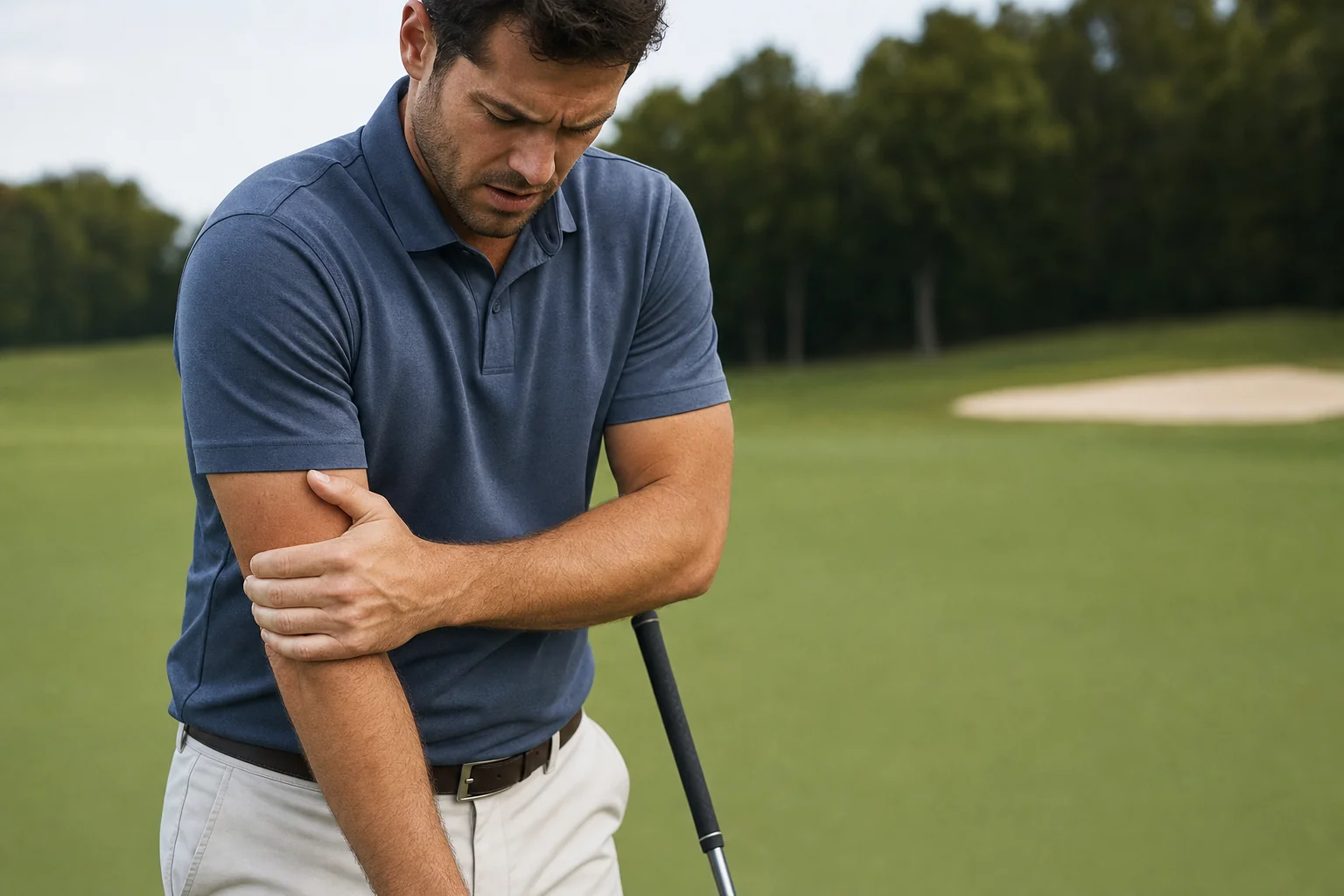
Golfer's elbow, or medial epicondylitis, is an overload of the tendons on the inside of your elbow. These are the tendons that flex your wrist and grip the club.
It builds up over time rather than appearing from one bad shot. Repeated gripping and the loading of impact irritate the tendon faster than it can recover.
It Is a Loading Problem, Not Just Damage
The tendon is not simply torn. It has been asked to do more than it can currently handle, which is why the fix is about rebuilding its capacity, not just resting it.
Can You Keep Playing Golf With Golfer's Elbow?
In many cases, yes. The deciding factor is how irritable the tendon is, which you can judge by how it behaves during and after a round.
A useful rule is the traffic-light approach. It keeps you playing where it is safe and pulls you back before you set your recovery back weeks.
- Green: mild ache that stays low during play and settles within a day. Playing on is usually fine.
- Amber: pain that climbs during the round or lingers a day or two. Reduce volume and modify before your next game.
- Red: sharp pain, weakness, or grip that keeps failing. Stop and get it assessed before it becomes chronic.
Pushing Through Red Is How It Becomes Chronic
The golfers who end up in months of rehab are usually the ones who ignored sharp pain and kept playing full rounds. Respecting the red light early is what keeps this a short problem.
How to Keep Playing Without Making It Worse
If you are in the green or amber zone, a few changes let you keep golfing while the tendon settles. The goal is to lower the load on it, not to grit your teeth through pain.
- 01
Warm Up the Forearm
Do a few minutes of gentle wrist and grip mobility before you hit balls, never cold into a full swing.
- 02
Soften Your Grip
A lighter grip pressure and a slightly larger grip size both cut the strain on the tendon.
- 03
Cap Your Volume
Fewer holes, fewer range balls, and no long grinding practice sessions while it is irritable.
- 04
Skip the Fat Shots
Heavy turf and mats jar the tendon most, so ease off range mats and thick rough for a while.
- 05
Use a Brace if It Helps
A counterforce forearm strap can take the edge off during a round for some golfers.
These changes are a bridge, not a cure. They keep you on the course while the real work, progressive loading, does the healing.
What Actually Cures Golfer's Elbow
This is where most golfers go wrong. They rest until the pain eases, return to golf, and it flares straight back, because rest lowers the pain but does nothing to build the tendon's capacity.
A tendon that hurts under load gets better by learning to handle load again, gradually. You cannot rest your way to a strong tendon.
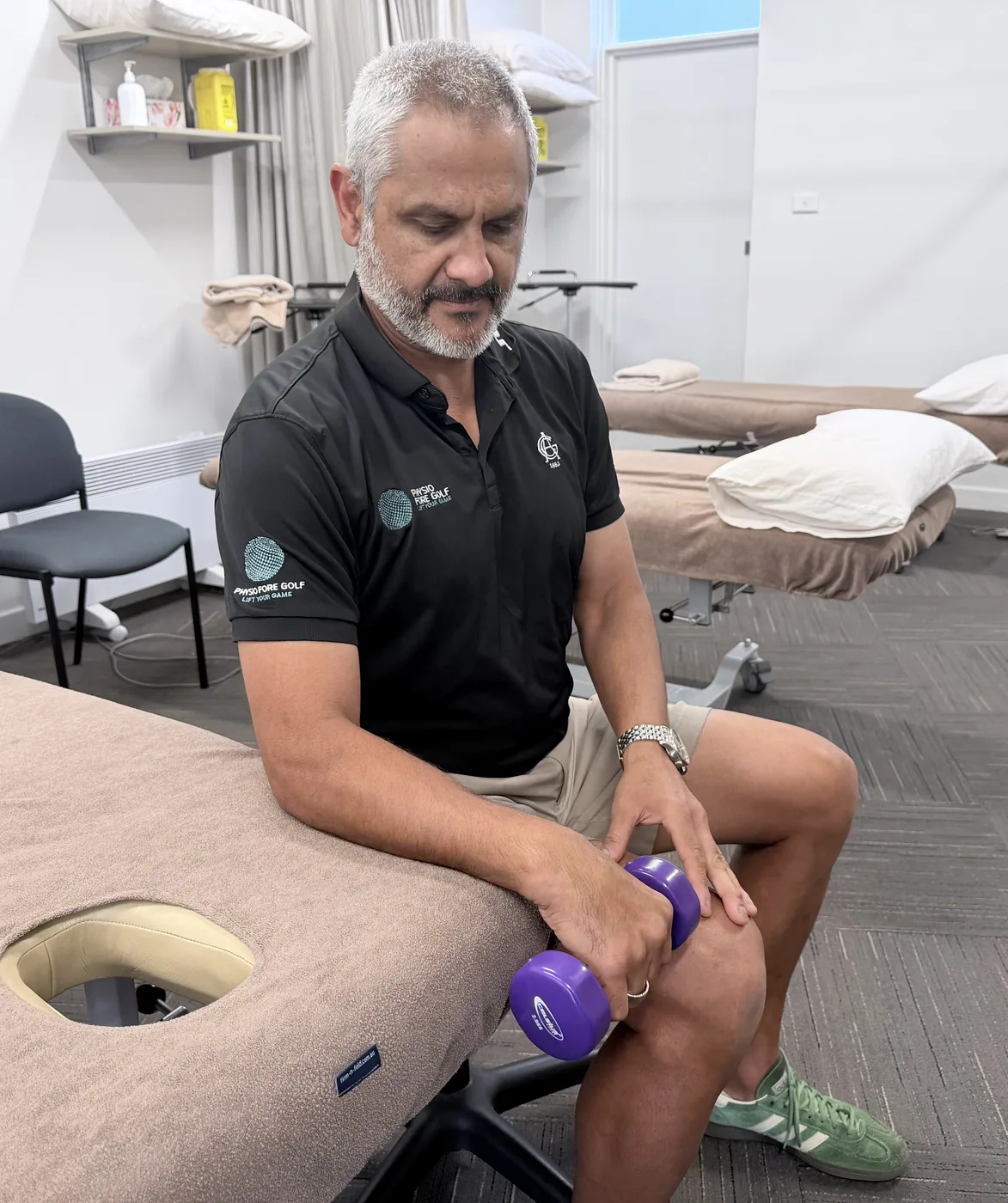
The evidence-backed fix is progressive strengthening of the wrist flexors and grip, loaded in a way that the tendon can tolerate and then slowly increased.
- 01
Settle the Irritability
Reduce the aggravating load first so the tendon is calm enough to start loading.
- 02
Load It Progressively
Begin gentle wrist-flexor and grip strengthening, building weight and reps over weeks as it tolerates more.
- 03
Rebuild Golf Capacity
Reintroduce grip volume and swing load in steps, so returning to full golf does not spike it again.
- 04
Address the Cause
Fix the grip, swing-load or strength gaps that overloaded the tendon in the first place.
This Is What a Golf Physio Does
A golf-specific assessment works out how irritable the tendon is, prescribes the right loading dose, and tracks it so you keep playing while it strengthens, rather than guessing.
How Long Does Golfer's Elbow Take to Heal?
It depends on how long it has been there and how irritable it is. The single biggest factor is how early you start managing the load properly.
| Stage | Indicative Timeframe | What Helps Most |
|---|---|---|
| Caught early, mild | A few weeks | Load management plus early strengthening |
| Established, moderate | Around 6 to 12 weeks | A structured progressive loading program |
| Persistent or recurring | 3 to 6 months or more | Full assessment, loading, and fixing the cause |
Indicative recovery ranges only. Every golfer is different, and this is general guidance, not a diagnosis.
The golfers who recover fastest are the ones who start loading the tendon early and address why it was overloaded, rather than resting, returning, and flaring again.
Stopping Golfer's Elbow Coming Back
Once it settles, the aim is to keep the tendon strong enough for your golf so it does not return. A few habits make recurrence far less likely.
- Keep up a small amount of grip and wrist strengthening year round.
- Warm the forearms up before you play or practise.
- Watch your practice volume, especially sudden jumps before an event.
- Get your grip and swing load checked if the same elbow keeps flaring.
- Deal with early niggles quickly rather than playing through them.
Get Ahead of It
If your elbow has flared more than once, a golf fitness screening finds the grip, strength or swing-load pattern behind it, so you can fix the cause and keep playing.
Frequently Asked Questions
Should I stop playing golf completely with golfer's elbow?
Not always. If the pain is mild and settles quickly after a round, you can usually keep playing with some changes to grip, volume and warm-up. Sharp pain, weakness or pain that lingers for days is a sign to pull back and get it assessed.
Will rest cure my golfer's elbow?
Rest can ease the pain, but it rarely cures the problem on its own. The tendon needs to be loaded progressively to rebuild its capacity, otherwise it tends to flare again as soon as you return to golf.
How long before I can play pain-free again?
Caught early and managed well, mild cases often settle within a few weeks. More established or recurring cases can take a few months. Starting the right loading early is the biggest factor in a faster recovery.
Does a golfer's elbow brace work?
A counterforce forearm strap helps some golfers get through a round by reducing the strain on the tendon. It is a useful aid, not a cure, and works best alongside a proper strengthening program.
How do I stop it coming back?
Keep the forearm and grip strong, warm up before you play, avoid sudden jumps in practice volume, and address any grip or swing-load pattern that overloaded the tendon. Dealing with early niggles quickly also stops them becoming stubborn.
Related Service
Golf Injury Assessment
When something hurts, you want to know what it is, why it happened, and how to fix it. A golf injury assessment answers all three.
Explore Golf Injury AssessmentSummarise This Article With AI
Open in your favourite assistant for a quick summary.